
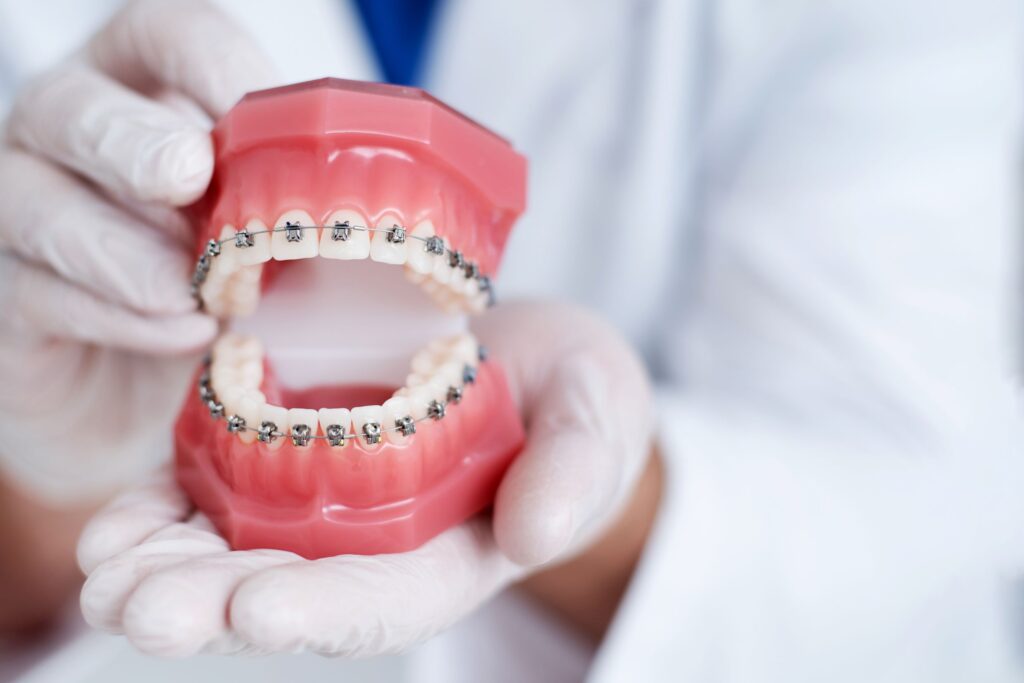
Many people think of their crooked teeth as ‘merely’ an aesthetic concern. However, the truth is that gapped or overcrowded teeth and/or bite misalignments can also negatively affect your oral health. For example, it’s often challenging to brush and floss all their surfaces, increasing the risk of developing cavities or gum disease.
Although many dentists offer clear aligners for patients seeking a more discreet solution, there are some circumstances in which braces are the better option. Continue reading to learn 3 reasons to consider the tried-and-true method of straightening smiles!
#1: They Don’t Require Tracking
Clear aligners continue to gain popularity as a convenient alternative to standard orthodontics because the transparent trays are completely removable, so there are no dietary restrictions. However, they must be worn for 20 to 22 hours daily to prevent teeth from reverting to their starting positions. Patients who are forgetful or have poor time management skills might struggle to meet this requirement, which can add extra weeks to their overall treatment timeline.
Meanwhile, the metallic brackets of your braces are anchored to your enamel so you don’t have to worry about tracking how long you’ve worn them or whether or not your grin might relapse.
#2: They Allow for More Movement
Despite the popularity of clear aligners, there are some situations in which braces are a more effective treatment option. This is because the transparent trays are designed to fit snugly over your arches and exert gentle yet consistent pressure to shift your teeth, which is often an effective way to treat milder misalignments.
However, teeth that are more severely torqued or have a longer distance to travel might require traditional orthodontics. Braces are threaded with an adjustable archwire that gives your provider a greater ability to manipulate the movement of your smile to address everything from mild issues to more severe misalignments.
#3: They Are More Durable
Many patients opt for clear aligners because the smooth plastic trays are considered more comfortable than metal brackets. However, each set of aligners is only intended to be worn for a week or two, so they’re not designed to be overly durable. They can also develop plaque, become cracked, or become stained if you don’t care for them properly. If they are damaged, you’ll have to pay for the replacements and could end up with a longer treatment timeline.
But braces are bonded to the fronts of your enamel and are made of metal, which is less likely to be harmed. It’s important to eat carefully and follow your provider’s care instructions to keep them clean, but thankfully, there’s no need to worry about losing or breaking a tray.
If you’re still unsure which orthodontic service would best meet your unique needs, you can learn more by scheduling a consultation with your dentist!
Meet the Author
Dr. Brett Noorda has about 25 years of experience helping people build and maintain beautiful, healthy teeth and gums. He earned his Doctor of Dental Medicine degree with Honors from the Oregon Health Sciences University School of Dentistry, and also received the Larry E. Sorum Memorial Award for Excellence in Endodontics. Today, he offers a comprehensive menu of services, including traditional braces and clear aligners, to meet all your needs conveniently under one roof. You can request an appointment on the website or by calling (702) 456-7403.